
Cargo to South Korea from Dubai is a regular air and sea freight service for businesses, exporters and families moving goods between the UAE and one of East Asia’s largest economies. Whether you are sending electronics, textiles, machinery, auto parts or personal effects, shipping to South Korea from Dubai is straightforward once you choose the right mode, prepare the right documents and allow the right amount of time for Korea customs clearance.
South Korea is home to major manufacturing and technology centres in Seoul, Busan, Incheon, Daegu, Daejeon and Ulsan, and its ports and airports are among the busiest in the world. That makes Dubai to South Korea cargo cost, transit time and paperwork easier to plan than for many other long-haul routes: there are frequent sailings from Jebel Ali to Busan, and daily air connections through Dubai International (DXB) and Al Maktoum (DWC) to Incheon International Airport (ICN).
This guide explains how cargo to South Korea from Dubai works, what it costs by air and by sea, how long each option takes, which documents you need, and how delivery works once your shipment reaches Busan or Incheon. All prices are indicative guides for November 2026 and will vary with weight, volume, commodity and the sailing or flight you book, so always confirm a written quote before you ship.
What Is Cargo to South Korea from Dubai?
Cargo to South Korea from Dubai covers the door-to-door movement of commercial and personal goods from the UAE to South Korea by air freight, sea freight or a combination of the two. A forwarder collects your goods in Dubai, handles export formalities in the UAE, books space on a vessel or an aircraft, clears customs in South Korea and delivers to the receiver’s address in Seoul, Busan or another city.
The service is used by exporters sending commercial goods to Korean buyers, by Korean companies sourcing products from Dubai and the wider region, by e-commerce sellers, and by individuals relocating or sending personal effects. Typical cargo includes consumer electronics and components, garments and textiles, cosmetics and beauty products, machinery and spare parts, auto parts, food products, furniture and household goods.
Most shipments travel one of two ways. Sea freight carries larger, heavier and less urgent loads in containers through the Port of Busan, South Korea’s largest container port. Air freight carries urgent, high-value or smaller loads through Incheon International Airport, with onward delivery to Seoul and the rest of the country. Many shippers use both: sea freight for regular stock and air freight for urgent orders. Our air cargo services in Dubai explain the air option in detail, including rates per kg and booking cut-off times.
Air Freight vs Sea Freight to South Korea: Which Should You Choose?
Choosing between air and sea is the first decision for cargo to South Korea from Dubai, and it comes down to speed, cost and the size of your shipment. Our guide to air freight vs sea freight from Dubai covers the same choice for every destination, and the logic applies directly to South Korea.
- Air freight: door-to-door in about 3 to 6 days. Best for urgent orders, samples, high-value electronics, small parcels and goods under about 500 kg. You pay per chargeable kilogram, so it is expensive for bulky, low-value cargo.
- Sea freight: port-to-port in about 18 to 25 days, and door-to-door in about 25 to 35 days. Best for full containers, heavy machinery, furniture, bulk stock and any shipment over about 2 CBM where time is not critical.
- Sea-air combination: sea freight to a hub such as Singapore, then air freight to Incheon. Rarely used for South Korea because direct air and sea options are both well served, but it can suit mid-urgency cargo.
As a rule of thumb, if your cargo fits in a few cartons and your buyer needs it this week, fly it. If you are filling a container or restocking a warehouse, ship it by sea. If you are unsure, ask for both quotes on the same shipment and compare the total landed cost, including customs duty and delivery in South Korea, not just the freight rate.
Container choice matters for sea freight. A 20-foot container suits heavy, dense cargo, while a 40-foot container suits lighter, bulkier loads. If you do not have enough cargo for a full container, LCL (less than container load) lets you pay only for the space you use. Read our FCL vs LCL shipping from Dubai guide before you decide which container option fits your shipment.
Cargo to South Korea from Dubai: Costs and Price Guide
Dubai to South Korea cargo cost depends on the mode you choose, the chargeable weight or volume, the commodity, and the time of year. The figures below are indicative ranges for general cargo in November 2026. They do not include customs duty, Korea import VAT, or delivery beyond the port or airport unless stated, and rates can move with fuel prices, peak season and available space.
- Air freight to South Korea from Dubai: about AED 18 to AED 35 per kg for general cargo, depending on weight break. Shipments under 45 kg are usually the most expensive per kg, while shipments over 300 kg and over 500 kg attract lower per-kg rates. Express and next-flight-out services cost more.
- Sea freight to South Korea, LCL: about AED 350 to AED 650 per CBM, with a minimum charge of 1 CBM. Port and handling charges in Jebel Ali and Busan are added on top.
- Sea freight to South Korea, FCL 20-foot container: about AED 6,500 to AED 10,000 port-to-port, Jebel Ali to Busan.
- Sea freight to South Korea, FCL 40-foot container: about AED 9,000 to AED 14,000 port-to-port, Jebel Ali to Busan.
Air freight is charged on chargeable weight, which is the greater of the actual gross weight and the volumetric weight. Volumetric weight in kilograms is length x width x height in centimetres divided by 6,000. A light but bulky carton can therefore cost far more by air than its scale weight suggests, so measure and weigh every carton accurately before you ask for a quote.
Sea freight is charged per container or per CBM for LCL, but the freight rate is only part of the total. Allow for origin charges in Dubai, destination charges in Busan, customs clearance, import duty and VAT in South Korea, and final delivery. A door-to-door quote that includes all of these is easier to compare than a port-to-port rate on its own. If your cargo is valuable, add cargo insurance in Dubai to your quote; it usually costs a small percentage of the cargo value and covers loss or damage in transit.
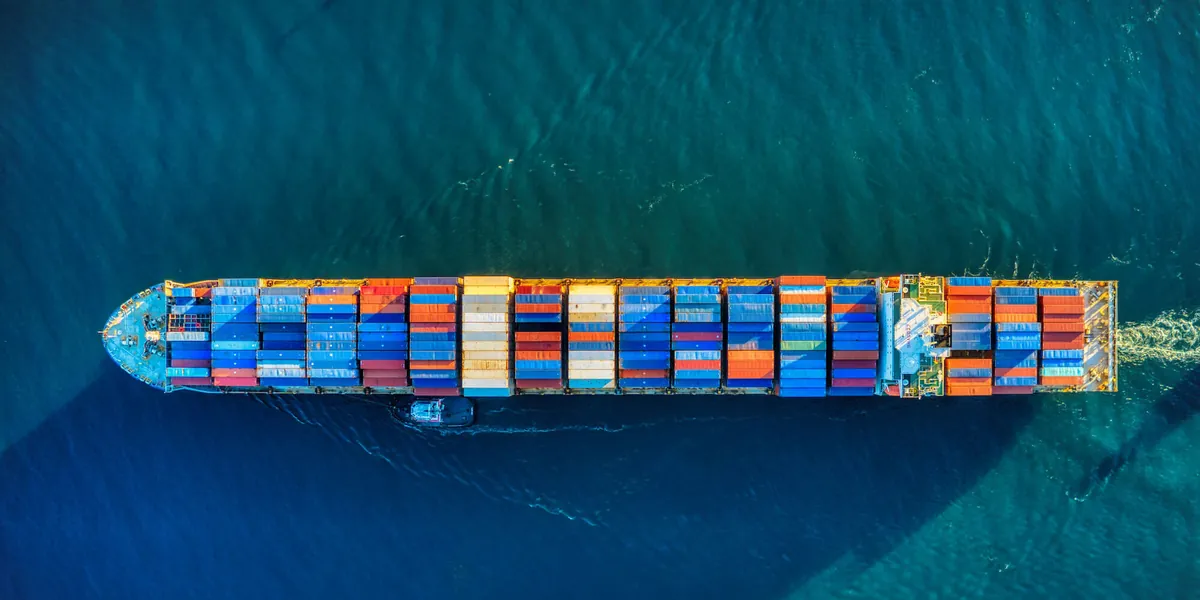
Sea Freight to South Korea Transit Time: Jebel Ali to Busan
Sea freight to South Korea transit time is the part of the journey most shippers ask about first, because it decides when stock will arrive. Most sailings from Jebel Ali to Busan take about 18 to 25 days port-to-port, travelling east through the Strait of Malacca and the South China Sea, usually with a transhipment stop in Singapore or Port Klang. Direct sailings are less common on this lane, so the transhipment port and the connection time can add several days.
Door-to-door, allow about 25 to 35 days for a sea freight shipment to South Korea from Dubai. That includes collection in Dubai, export clearance, the ocean leg, customs clearance in Busan and final delivery. LCL shipments take a little longer than FCL because the container must be consolidated in Dubai and deconsolidated in Busan before delivery.
- Jebel Ali to Busan, FCL: 18 to 25 days port-to-port; 25 to 32 days door-to-door.
- Jebel Ali to Busan, LCL: 20 to 28 days port-to-port; 28 to 35 days door-to-door.
- Air freight, DXB or DWC to Incheon: 1 to 2 days in the air; 3 to 6 days door-to-door including clearance and delivery.
- Air freight, express: 2 to 4 days door-to-door for urgent shipments that clear customs quickly.
Transit times for cargo to South Korea from Dubai can stretch during peak season, when vessels are full and space is tight, and during bad weather in the South China Sea. If your delivery date is fixed, book sea freight at least five to six weeks ahead and air freight at least a week ahead. Ask your forwarder for the sailing schedule and the cut-off date for your container, and build in a few days of buffer for customs checks in Busan.
How to Ship Cargo to South Korea from Dubai: Step by Step
Cargo to South Korea from Dubai follows the same seven steps for almost every shipment. Knowing them in advance avoids the delays that most often come from missing paperwork or a badly packed carton.
Step 1: Get a quote. Share the origin and destination addresses, a description of the goods, the weight and dimensions of each carton, and the value of the shipment. Your forwarder will quote air and sea options so you can compare cost and transit time.
Step 2: Book and prepare. Confirm the mode, the sailing or flight, and the collection date. Pack goods in strong export cartons, label each carton with the receiver’s name and address in English, and mark fragile or this-way-up items clearly.
Step 3: Collection and export clearance in Dubai. Your goods are collected, weighed and measured, and the UAE export declaration is filed. Commercial cargo is usually exported under the shipper’s trade licence; personal effects are exported under the owner’s passport and visa documents.
Step 4: International transport. Air freight flies from DXB or DWC to Incheon, and sea freight sails from Jebel Ali to Busan. You receive the air waybill or bill of lading number so you can track the shipment.
Step 5: South Korea customs clearance. Your agent in South Korea files the import declaration with the Korea Customs Service, pays duty and VAT on your behalf if agreed, and answers any queries from customs. This is covered in detail below.
Step 6: Delivery in South Korea. After clearance, the cargo is delivered to the receiver in Seoul, Busan, Incheon or another city, or held at the port or airport for collection if you prefer.
Step 7: Proof of delivery. Keep the signed delivery note, the airway bill or bill of lading, and the customs clearance papers. They are useful if you need to claim on insurance or prove the value of the goods later.
If you are sending goods that need special handling, such as temperature-controlled food or dangerous goods, tell your forwarder at the quote stage. Our cold chain logistics in Dubai service covers refrigerated cargo, and dangerous goods shipping from Dubai covers batteries, chemicals and other restricted items that need approved packing and documentation.
Documents Required for Shipping to South Korea
For cargo to South Korea from Dubai, correct documents are the difference between a shipment that clears in a day and one that sits in Busan for a week. Prepare these before your cargo leaves Dubai:
- Commercial invoice: on your company letterhead, showing the seller and buyer, a full description of the goods, quantities, unit values, total value, currency and the terms of sale (Incoterms).
- Packing list: showing the contents, weight and dimensions of every carton, pallet or crate, with carton numbers that match the marks on the goods.
- Bill of lading (sea) or air waybill (air): issued by the carrier, showing the shipper, consignee, notify party, port of loading and discharge, and the number of packages.
- Certificate of origin: issued in the UAE, showing where the goods were made. It may be needed for preferential duty or for the buyer’s records.
- HS codes: the correct Harmonised System code for each item, used to work out duty and to check whether a licence or certificate is required.
- Importer’s details: the Korean receiver’s business registration number for commercial imports, or passport details for personal shipments, plus a Korean delivery address and phone number.
- Product certificates where required: KC certification for electronics and electrical goods, Ministry of Food and Drug Safety approval for food, cosmetics and medicines, and phytosanitary certificates for plants and plant products.
For personal effects, add a detailed inventory with values, a copy of the owner’s passport and Korean visa or residence card, and a letter stating that the goods are used personal belongings. Our shipping personal effects from Dubai guide explains what is allowed and what is not for household moves.
Check every document against the cargo before it leaves. A value on the invoice that does not match the packing list, a missing HS code, or a consignee name spelled differently on two documents are the most common reasons Korean customs holds a shipment for questions.
South Korea Customs Clearance: Duties, Taxes and Rules
South Korea customs clearance for cargo to South Korea from Dubai is handled by the Korea Customs Service, and most straightforward shipments clear within one to two working days once the declaration is filed and any duty and VAT are paid. Delays usually come from missing documents, a wrong HS code, or goods that need a separate licence or certificate.
Import duty in South Korea depends on the HS code and the origin of the goods, and rates for most general goods are between 0% and 8%, although some items such as certain foods, textiles and vehicles can be higher. Import VAT is 10% and is charged on the customs value plus duty. Low-value shipments, generally under USD 150, may qualify for simplified list clearance, but commercial shipments should still be declared properly with a full invoice and packing list.
Check whether your goods qualify for preferential duty under the UAE-South Korea Comprehensive Economic Partnership Agreement, and ask your agent about the certificate of origin needed to claim it. For help with the UAE side of the process, see our guide to customs clearance in Dubai for cargo, which explains export declarations, inspections and the documents Dubai customs expects.
Some goods need extra approval before they can enter South Korea. Electronics and electrical products usually need KC certification, food and cosmetics need approval from the Ministry of Food and Drug Safety, and medicines and medical devices need their own registrations. Batteries, aerosols, paints and chemicals may be classed as dangerous goods and need approved packing, labelling and a safety data sheet. Send your forwarder the product details early so these checks can be done before the cargo sails or flies.
What Can You Ship to South Korea from Dubai?
Cargo to South Korea from Dubai can include almost any lawful commercial or personal goods, but the packing, documents and mode depend on the goods. Electronics, computer parts and mobile accessories are the most common air freight items because they are light, valuable and urgent. Garments, textiles, cosmetics, perfumes, toys and homeware travel well by both air and sea. Machinery, spare parts, building materials and furniture are usually sea freight because of their weight and size.
Food products, including dates, spices, dried goods and packaged foods, can be shipped if they meet Korean food safety rules and are labelled correctly, with ingredients and expiry dates in Korean or English. Temperature-controlled food needs refrigerated transport from collection to delivery. Oversized or heavy items such as industrial equipment, generators and vehicles need specialist handling; our project cargo from Dubai service covers out-of-gauge and heavy-lift shipments.
Prohibited and restricted items include narcotics, counterfeit goods, unlicensed medicines, certain chemicals, and goods that infringe Korean intellectual property law. Lithium batteries on their own, and some electronic devices with large batteries, are restricted on passenger aircraft and may need to travel on a freighter or by sea. If you are unsure whether your goods can travel, send the product name, HS code and a photo to your forwarder before you book.
Busan and Incheon Cargo Delivery: Coverage Across South Korea
Busan Incheon cargo delivery for cargo to South Korea from Dubai covers the whole of South Korea, not just the two gateway cities. Sea freight arrives at the Port of Busan, the country’s largest container port, and is cleared and delivered by road to Busan, Ulsan, Pohang, Daegu and the south-east industrial region. Air freight arrives at Incheon International Airport and is delivered to Seoul, Incheon, Suwon, Daejeon and the wider metropolitan area, usually within a day of clearance.
Seoul is the main delivery market for e-commerce, electronics and personal effects, while Busan and Ulsan are the main destinations for industrial cargo, auto parts and machinery. Gwangju, Daejeon and Daegu are served by the same road network, with delivery usually one to two days after clearance. Remote addresses and islands take longer, so share the full delivery address and postcode when you ask for a quote.
If your receiver is in South Korea, make sure they are available to accept delivery and to answer customs queries, and that their phone number works for local calls. A receiver who cannot be reached is a common cause of storage charges at the port or airport. For businesses that ship regularly to South Korea, a forwarder can also arrange consolidation, warehousing in Dubai and scheduled sailings so that stock arrives on a predictable cycle. As well as cargo to South Korea from Dubai, we also ship to other long-haul destinations, including the USA, Colombia, Argentina, Chile, Mexico and South Africa, and our guide to cargo to Peru from Dubai shows how the same door-to-door process works for another long-haul destination.
Frequently Asked Questions
How long does cargo to South Korea from Dubai take by sea?
Sea freight to South Korea from Dubai takes about 18 to 25 days port-to-port from Jebel Ali to Busan, and about 25 to 35 days door-to-door including collection, export clearance, customs clearance in Busan and final delivery. LCL shipments usually take a few days longer than FCL because the container is consolidated and deconsolidated at each end.
How much does it cost to ship cargo to South Korea from Dubai?
As an indicative guide, air freight to South Korea from Dubai costs about AED 18 to AED 35 per kg, LCL sea freight costs about AED 350 to AED 650 per CBM, a 20-foot container costs about AED 6,500 to AED 10,000 port-to-port, and a 40-foot container costs about AED 9,000 to AED 14,000 port-to-port. The final price depends on weight, volume, commodity and the sailing or flight, and it does not include Korea duty, VAT or delivery unless your quote says so.
What documents do I need to ship cargo to South Korea from Dubai?
You need a commercial invoice, a packing list, a bill of lading or air waybill, a certificate of origin and the correct HS codes for your goods. Commercial shipments also need the Korean importer’s business registration number, while personal shipments need the owner’s passport and visa or residence details. Some products need extra certificates, such as KC certification for electronics or food safety approval for food products.
Can I send personal effects and household goods to South Korea?
Yes, you can send personal effects and household goods to South Korea by air or sea. You will need a detailed inventory with values, a copy of your passport and Korean visa or residence card, and a letter stating that the goods are your used personal belongings. Used household goods may qualify for duty relief if you have lived abroad for a set period and meet the Korean customs conditions, so check this with your agent before you ship.
Is cargo insurance recommended for shipments to South Korea?
Yes. Cargo insurance is recommended for every shipment to South Korea, and it is especially important for high-value electronics, fragile goods and full containers. It usually costs a small percentage of the cargo value and covers loss or damage during loading, transport and unloading. Your forwarder can add it to your quote, and you should keep the invoice, packing list and photos of the packed goods in case you need to claim.
Do you deliver to Seoul and Busan, or only to the port and airport?
We deliver door-to-door to Seoul, Busan, Incheon and other cities across South Korea, not just to the port or airport. Sea freight is cleared in Busan and delivered by road, and air freight is cleared at Incheon and delivered to the receiver’s address. If you prefer, your receiver can also collect the cargo from the port or airport after clearance.
Cargo to South Korea from Dubai is a well-served route with frequent sailings to Busan and daily flights to Incheon, so the hardest part is usually choosing between air and sea and getting the paperwork right. Get a written quote for both modes, prepare your invoice and packing list carefully, and allow enough time for Korea customs clearance. If you are ready to ship, contact us for a door-to-door quote and we will confirm the cost, transit time and documents for your cargo.


