Moving abroad, returning home after years in the UAE, or sending your household goods to family overseas all start with the same question: how do you move a home across the world without the stress? Shipping personal effects from Dubai is a well-established service, and when it is planned properly your furniture, clothes, books and electronics arrive safely, clear customs without drama, and cost far less than buying everything again. This guide explains what counts as personal effects, how sea and air freight compare, what documents you need, how customs treats used household goods, and how to pack and book your shipment step by step.
Whether you are relocating for work, moving back to your home country, or sending a few boxes of belongings to a new home, the principles for shipping personal effects from Dubai are the same. The key decisions are the shipping method, the size of your shipment, and the paperwork — get those three right and the rest follows. For a closer look at container options for larger loads, see our guide to FCL vs LCL shipping from Dubai.
What Counts as Personal Effects When Shipping from Dubai?
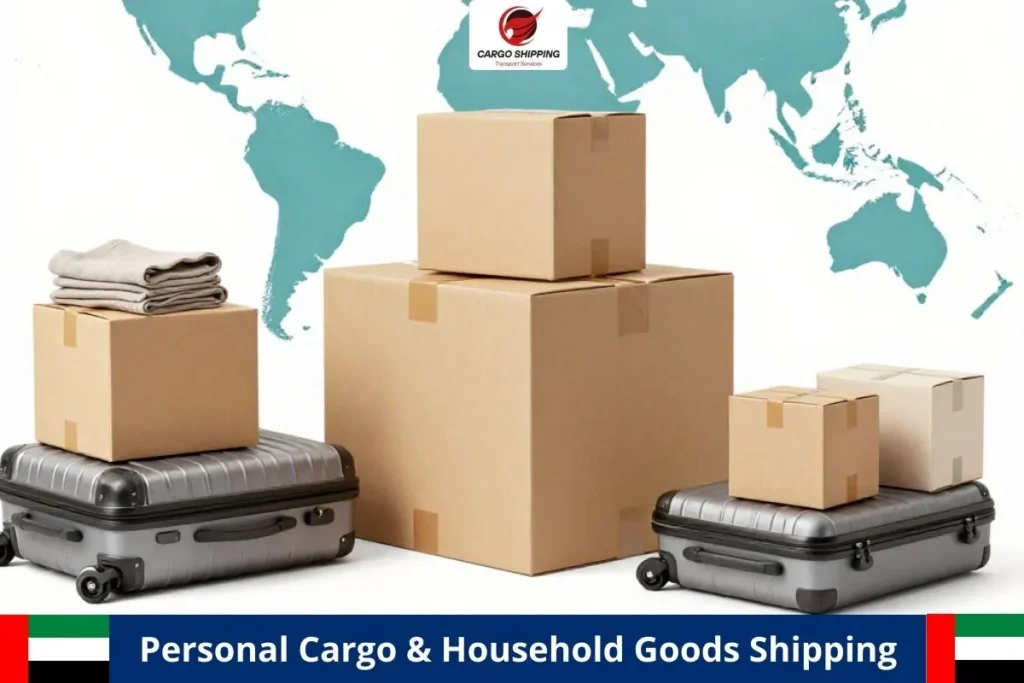
Personal effects are the used household goods and personal belongings of someone who is moving or sending their own possessions overseas. Typical personal effects cargo Dubai shipments include furniture such as beds, sofas, tables and wardrobes; clothing and shoes; books and toys; kitchenware; and household electronics such as televisions, computers and small appliances. The defining feature is that the goods are used, owned by you, and intended for your own personal use at the destination — not for sale.
That distinction matters, because customs authorities treat used personal effects very differently from new commercial goods. Used household goods that you have owned and used — commonly for six months or more — are often duty-exempt at the destination when they are declared as used household goods and supported by a detailed inventory. New goods, by contrast, are dutiable: if you buy a brand-new television in Dubai and ship it overseas, expect to pay duty and tax on its value. Keep receipts for newer items and list them separately on your inventory so customs can see exactly what is used and what is new.
- Usually accepted as personal effects: used furniture, clothing, books, toys, kitchenware, bedding, sports equipment and household electronics.
- Often restricted: aerosols, flammable liquids, paints and solvents, perishable food, plants and seeds, alcohol in large quantities, and some medicines.
- Not personal effects: commercial stock, goods bought for resale, and items belonging to a business — these need a commercial shipment and a commercial invoice.
If you are unsure whether something can travel, ask your forwarder before you pack it. Restricted items discovered at the port can delay the whole shipment and add storage and inspection charges.
Should You Ship Personal Effects by Sea or by Air?
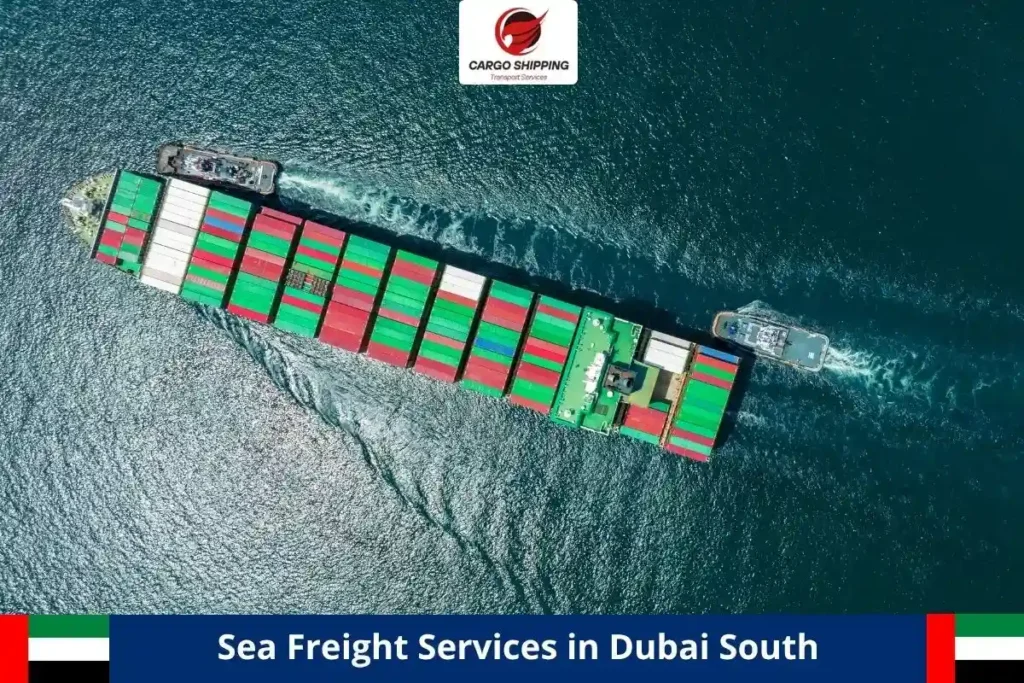
The first big choice is the mode of transport. Sea freight is the cheapest way to move household goods shipping Dubai customers send overseas, and it is the natural choice for furniture and large volumes. Air freight is far faster but costs much more per kilogram, so it suits urgent items, valuables and small loads. Most families use a combination: the bulk of the household goes by sea, while a few essential boxes travel by air so they arrive within days of landing.
| Factor | Sea freight | Air freight |
|---|---|---|
| Typical transit time | Dubai to the UK: 25–35 days port-to-port | 3–7 days door-to-door for most routes |
| Relative cost | Lowest cost per kg and per CBM | Roughly 4–6 times the cost per kg of sea freight |
| Best for | Furniture, large volumes, full households | Urgent items, valuables, small loads |
| Minimum volume | LCL from 0.5–1 CBM | From a few kilograms |
| Size limits | Almost no practical limit | Limited by aircraft and airline rules |
For the full comparison of speed, cost and suitability, read our guide to air freight vs sea freight from Dubai. If your move is not urgent and your shipment is larger than a few boxes, sea freight will almost always give you the best value.
LCL or FCL for Personal Cargo: Which Suits Your Move?
For personal effects, the choice between LCL and FCL usually comes down to volume. A few boxes or a small room of furniture fits easily into a shared container: LCL services accept shipments from as little as 0.5 to 1 CBM, so you only pay for the space your belongings occupy. A full household, with furniture for several rooms, appliances and dozens of boxes, often fills a 20ft container, and at that point FCL can be cheaper per CBM and faster, because the container is sealed for you alone and moves directly port-to-port.
As a guide, if your shipment is under about 12 to 15 CBM, compare the LCL price with the FCL price; above that volume, FCL is usually the better value. Our guide to FCL vs LCL shipping from Dubai explains the break-even point, container sizes and transit-time differences in detail. Whichever you choose, professional packing matters: LCL cargo is handled more often, so strong boxes, good wrapping and clear labels protect your belongings.
What Affects the Cost of Shipping Personal Effects from Dubai?
The cost of personal effects cargo Dubai shipments depends on several factors, and understanding them helps you get an accurate quote and avoid surprises. The biggest factors are the volume of your shipment in CBM and its weight, the destination country and city, and whether you choose sea or air freight. A small LCL shipment to the UK costs far less than a full 40ft container to Australia, simply because the volume and the distance are greater.
- Volume and weight: sea freight is charged per CBM or per metric ton, whichever is greater; air freight is charged per kilogram, so heavy items cost more by air.
- Destination and route: longer routes and less frequent sailings cost more; popular routes to the UK, Europe and Australia are usually the best value.
- Service level: port-to-port is the cheapest; door to door personal cargo Dubai service costs more but includes collection, delivery and customs handling.
- Packing and insurance: professional packing and cargo insurance add to the price but protect your belongings; for a household move, both are worth having.
- Customs and destination charges: port handling, inspection and delivery charges at the destination vary by country and must be included in any honest quote.
Always ask for an all-in written quotation that lists origin charges, freight, destination charges and customs clearance separately. A quote that looks cheap but excludes destination charges can end up costing more than an honest all-in price. We also offer warehousing and storage in Dubai if your new home is not ready and your belongings need to wait a few weeks before shipping.
What Documents Do You Need to Ship Personal Effects from Dubai?
Good paperwork is the difference between a smooth move and a shipment stuck at the port. Prepare these documents before your collection date, and keep copies with you when you travel:
- Passport copy: the passport of the person whose effects are being shipped, showing your identity and travel history.
- Visa or residence proof: your UAE residence visa or proof of residence, and your visa for the destination country where applicable.
- Detailed inventory or packing list: a room-by-room list of every item, its quantity and its value; this is the document customs relies on most.
- Bill of lading or air waybill: issued by the carrier for sea and air shipments; it is your contract of carriage and your proof of shipment.
- Insurance certificate: if you have taken cargo insurance, keep the certificate with your travel documents.
Write your inventory carefully and honestly. Vague entries such as miscellaneous invite questions from customs officers, while a clear list, for example one double bed, two bedside tables, 24 books and one 55-inch television, used, speeds clearance and supports any duty relief claim. Our team checks your documents before the shipment leaves Dubai, and our customs clearance specialists handle the export formalities and coordinate with agents at the destination.
How Does Customs Treat Used Personal Effects?
Used personal effects customs rules are generally kinder than the rules for new commercial goods, but they vary by country and you must meet the conditions. Most destinations allow returning residents and people relocating to bring used household goods duty-free, provided the goods have been owned and used by you for a set period — often six months or more — and you can show that you are moving your residence. Some countries run formal relief schemes, such as the UK Transfer of Residence relief, which lets people moving to the UK bring their used household goods without paying duty, provided they apply in advance and meet the residence conditions.
What matters most is evidence: a detailed inventory with values, proof that the goods are used, your passport and visa, and any relief application the destination country requires. New items in their original packaging, multiple identical items, and goods that look bought for resale can be treated as dutiable and charged duty and tax. Be honest on the inventory, declare new items separately, and let your forwarder check the destination rules before the shipment leaves Dubai, so there are no surprises at the port.
How Should You Pack Personal Effects for International Shipping?
Good packing is what stands between your belongings and a long sea journey. Use strong, double-walled boxes, wrap fragile items individually in bubble wrap or paper, and fill empty spaces so nothing moves inside the box. Label every box with its contents and the room it belongs to, and number the boxes so they match your inventory list — that makes unpacking at the destination far easier and helps if a box ever goes missing.
- Keep essentials separate: pack a small air-freight box with the things you need in the first week, such as documents, chargers, a change of clothes and basic kitchen items.
- Protect furniture: wrap wooden furniture in blankets and plastic, remove legs and handles where possible, and keep screws and fittings in labelled bags.
- Electronics: use their original boxes where you have them, remove batteries where the carrier requires it, and photograph valuable items before packing.
- Do not overfill: heavy boxes break and are hard to carry; keep each box under about 25 kg and mark heavy boxes clearly.
How Does Shipping Personal Effects from Dubai Work, Step by Step?
International relocation from Dubai is straightforward when you follow a clear process. Here is how a typical personal effects shipment works with Cargo Shipping Dubai:
- Step 1 — Get a quote: share your inventory or an estimate of volume, your destination, and your preferred dates; we compare sea and air options and give you an all-in price.
- Step 2 — Survey and booking: for larger households we can arrange a survey of your belongings, then confirm the sailing or flight and the collection date.
- Step 3 — Packing and collection: our team packs your belongings professionally, labels every box against your inventory, and collects from your home anywhere in Dubai and the UAE.
- Step 4 — Customs and shipping: we prepare the export documents, clear UAE customs, and load your goods onto the vessel or aircraft.
- Step 5 — Delivery at destination: we track the shipment, complete the import formalities with our destination agent, and deliver to your new home.
We move personal effects from Dubai to destinations worldwide, including cargo to the UK from Dubai, Europe, the United States, Canada and Australia. Every shipment is tracked, and our team updates you from collection in Dubai to delivery at your new home. If you are also sending commercial goods, our guide to FCL vs LCL shipping from Dubai will help you choose the right container option.
Frequently Asked Questions About Shipping Personal Effects from Dubai
Are used personal effects duty-free when shipping from Dubai?
Often, yes. Used household goods that you have owned and used, commonly for six months or more, are often duty-exempt at the destination when declared as used personal effects with a detailed inventory. New goods are dutiable, and the rules vary by country, so check the destination rules and any relief scheme, such as the UK Transfer of Residence relief, before you ship.
How long does it take to ship personal effects from Dubai to the UK?
By sea freight, Dubai to the UK takes about 25 to 35 days port-to-port, plus collection, customs and delivery time at each end. By air freight, the same shipment typically takes 3 to 7 days door-to-door, but costs roughly four to six times as much per kilogram.
What is the smallest shipment I can send by sea freight?
LCL sea freight accepts shipments from as little as 0.5 to 1 CBM, so even a few boxes of personal effects can travel by sea. You pay per CBM or per metric ton, whichever is greater, plus a share of the handling charges.
What documents do I need to ship personal effects from Dubai?
You normally need a passport copy, visa or residence proof, a detailed inventory or packing list with values, and the bill of lading for sea freight or the air waybill for air freight. If you take cargo insurance, keep the insurance certificate with your travel documents.
Can I send personal effects door to door from Dubai?
Yes. Door-to-door service covers collection from your home in Dubai, packing, export customs, shipping, import customs at the destination and delivery to your new address. It costs more than port-to-port service, but it is the simplest option for a household move.