
Sea freight services in Dubai move most of the cargo that leaves the UAE, from a single pallet in a shared container to a full shipload of machinery. Dubai sits at the crossroads of Asia, Africa and Europe, and Jebel Ali Port gives shippers frequent sailings, competitive rates and a straightforward route to almost any seaport in the world.
This guide explains how ocean freight from Dubai works, what it costs per container, how long it takes, which documents you need and how to book. Whether you are shipping commercial stock, a vehicle, household goods or project cargo, you will find the practical detail you need to plan the shipment and avoid the delays that catch first-time shippers out.
What Are Sea Freight Services in Dubai?
Sea freight services in Dubai cover the whole journey of a shipment by sea: collection in Dubai, packing and container loading, export customs, the ocean voyage from Jebel Ali Port, arrival handling at the destination port, import customs clearance and final delivery. A forwarder can manage the full door-to-door service, or just the port-to-port leg if you prefer to arrange delivery yourself.
Most sea cargo from Dubai leaves from Jebel Ali, the largest port in the Middle East and one of the busiest container ports in the world. It is operated by DP World, whose ports and terminals network connects Jebel Ali with services to India, East Africa, the Mediterranean, Northern Europe, East Asia and the Americas. That connectivity is the reason so many shippers route their cargo through Dubai, even when the goods were made elsewhere.
Sea freight is the economical choice for heavy, bulky or lower-value cargo, and for anything that does not need to arrive this week. If your shipment is urgent, light or high value, air freight may be better, and our comparison of air freight vs sea freight will help you decide which mode fits your cargo.
Should You Choose FCL or LCL Sea Freight in the UAE?
The first decision in any sea cargo booking is whether to use a full container or a shared one. FCL, or full container load, means you hire the whole container for your cargo alone. LCL, or less than container load, means your cargo shares a container with other shippers’ goods, and you pay only for the space you use.
Choose FCL when your cargo fills most of a container, when it is fragile or high value and you want it sealed and untouched in transit, or when you need the fastest possible handling at the destination. A 20ft container holds roughly 28 CBM and up to about 28,000 kg, while a 40ft container holds roughly 58 to 68 CBM. If your volume is above about 15 CBM, FCL is often cheaper than LCL, because LCL is charged per CBM with a minimum of one CBM.
Choose LCL when your shipment is small, from one to about 12 CBM, and you do not need a full container. It is the standard choice for first-time exporters, e-commerce sellers and anyone sending a few pallets. The trade-off is time: LCL cargo must be consolidated at origin and deconsolidated at destination, which usually adds three to seven days to the transit time. Our guide to FCL and LCL shipping explains the cost crossover in more detail, so you can check the maths for your own shipment.
There are also specialist containers: refrigerated containers for food and pharmaceuticals, open-top and flat-rack containers for oversized machinery, and tank containers for liquids. Tell your forwarder what you are shipping and it will recommend the right equipment.
How Much Are Dubai Sea Freight Rates per Container?
Dubai sea freight rates per container depend on the destination, the container size, the shipping line and the season. The ranges below are indicative port-to-port rates from Jebel Ali for November 2026, for a standard dry container, and they do not include origin and destination handling, customs or delivery. Rates move with fuel prices, capacity and demand, so always confirm a written quote before you book.
- 20ft container, Jebel Ali to Nhava Sheva (India): around AED 3,500 to AED 5,500.
- 40ft container, Jebel Ali to Nhava Sheva (India): around AED 5,000 to AED 7,500.
- 20ft container, Jebel Ali to Mombasa (Kenya): around AED 5,500 to AED 8,000.
- 40ft container, Jebel Ali to Mombasa (Kenya): around AED 8,000 to AED 11,500.
- 20ft container, Jebel Ali to Rotterdam (Europe): around AED 6,500 to AED 9,500.
- 40ft container, Jebel Ali to Shanghai (China): around AED 7,000 to AED 10,500.
- LCL, Jebel Ali to most destinations: around AED 250 to AED 550 per CBM, with a one CBM minimum.
What else is charged? Expect a bill of lading fee, a documentation fee, terminal handling at Jebel Ali, and destination terminal handling and customs charges at the arrival port. For door-to-door service, add collection in Dubai, export clearance, delivery at destination and any storage if clearance is slow. Refrigerated containers cost more than dry containers, and dangerous goods attract a surcharge and stricter packing rules.
To get the best rate, book early, be flexible on the sailing date, and give accurate dimensions. A container that is booked late, or a shipment that is re-measured larger than declared, will cost more than a well-planned booking. If you are comparing routes, our guide to cargo to Ghana from Dubai shows how rates and transit times work on a West African route from the same port.
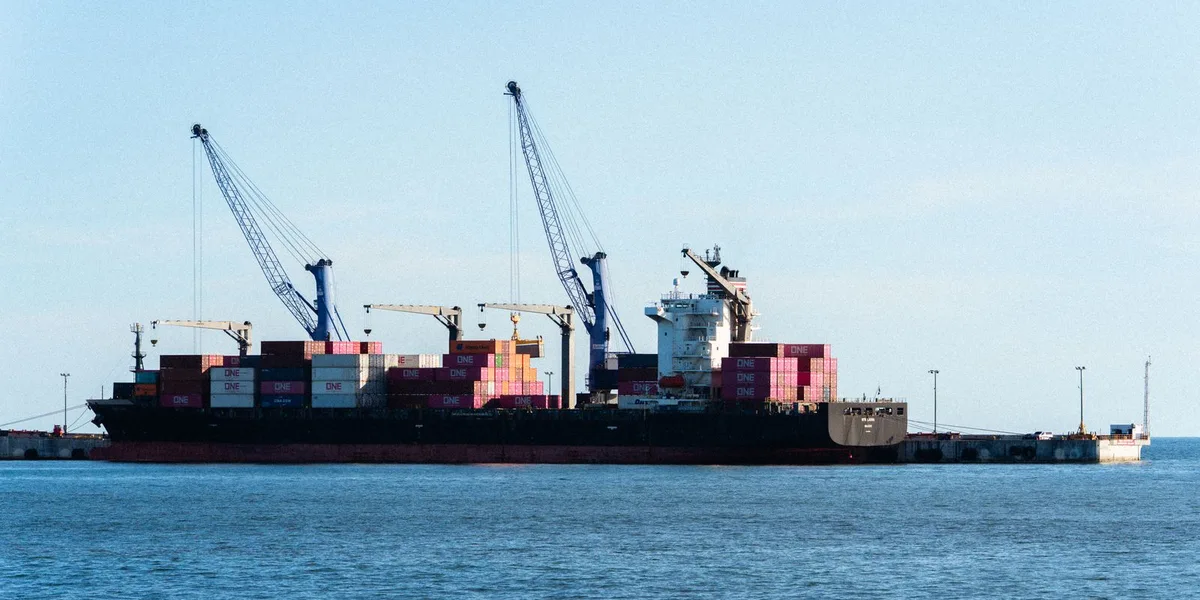
What Are the Sea Freight Transit Times from Jebel Ali?
Transit time depends on the destination and whether the service is direct or calls at other ports on the way. The times below are typical port-to-port sailings from Jebel Ali. Add three to seven days for collection, export clearance and consolidation at origin, and three to seven days for arrival handling, customs and delivery at destination, to get a realistic door-to-door time.
- India and Pakistan: 7 to 12 days port to port.
- East Africa, including Mombasa and Dar es Salaam: 18 to 25 days.
- West Africa, including Tema: 28 to 38 days, usually with a transhipment.
- Mediterranean ports: 14 to 22 days.
- Northern Europe, including Rotterdam and Hamburg: 22 to 30 days.
- East Asia, including Shanghai and Busan: 18 to 28 days.
- USA East Coast: 30 to 40 days.
LCL shipments usually take longer than FCL on the same route, because of consolidation and deconsolidation. Peak season, port congestion and bad weather can each add days, so build a buffer into your plan, especially if the goods are needed for a fixed date, a trade show or a production run. A forwarder who gives you the sailing schedule in writing, with the vessel name and the expected arrival date, is giving you a plan you can rely on.
How Do You Book Sea Cargo from Dubai?
Sea cargo booking in Dubai is a simple process when the details are agreed up front. Here is how it works, step by step.
- Ask for a quote. Share the cargo type, weight, dimensions, number of packages, collection address in Dubai and delivery address at destination. Your forwarder will confirm the container type, the sailing schedule and the price in writing.
- Confirm the booking. Agree the sailing, the service level and the Incoterms, and send the commercial invoice and packing list. The forwarder books space with the shipping line and confirms the container release and the cut-off time.
- Prepare and pack the cargo. The goods are collected, checked against the packing list and loaded into the container. Export packing must be strong enough for a sea voyage: cartons sealed, pallets strapped, and the container loaded so the weight is spread evenly.
- Weigh and declare the container. Every container must have a Verified Gross Mass (VGM) before it can be loaded on the vessel. Your forwarder arranges the weighing and files the VGM with the shipping line.
- Export customs clearance. The forwarder files the UAE export declaration and completes any export permits. Most general cargo clears quickly when the documents match the goods.
- Loading and sailing. The container is delivered to Jebel Ali, loaded on the vessel and sails on the booked service. You receive the bill of lading once the vessel has departed.
- Arrival and delivery. At the destination port, the cargo is discharged, cleared through import customs and delivered to the consignee. Your forwarder or its overseas agent keeps you updated at each stage.
For many of our customers, sea freight is part of a regular supply chain. If you ship the same route every month, ask about a contract rate: a fixed rate for a set volume over three or six months can protect you from spot-market swings and make your landed costs easier to plan.
What Documents Are Needed for Ocean Freight from Dubai?
Accurate documents keep ocean freight moving. Prepare these before the container is loaded.
- Commercial invoice: seller and buyer details, a clear description of each item, quantities, unit values, total value, currency and Incoterms.
- Packing list: the number of packages, their dimensions and weights, and what is inside each one.
- Bill of lading: issued by the shipping line once the cargo is loaded. This is the transport document and the proof of shipment, and the consignee needs it, or a telex release, to claim the goods.
- Certificate of origin: often required by the destination country, and sometimes needed to claim a preferential duty rate.
- Verified Gross Mass (VGM): the verified weight of the loaded container, required by international maritime rules.
- HS codes: the correct code for each product, which decides the duty rate at destination.
- Dangerous goods declaration: required for any cargo classed as dangerous, with the correct UN number, packing group and labelling.
- Product certificates: for example, health or phytosanitary certificates for food and agricultural products, and conformity certificates for regulated goods.
Do not understate values or misdescribe goods. Customs officers at destination check declared values against market prices, and a wrong declaration can lead to a reassessment, a fine and a delay. If you are unsure about a code or a value, ask your forwarder before the container sails, when a correction is cheap. Our team also handles customs clearance in Dubai for the export side, and works with licensed agents at destination for the import side.
What Can You Ship by Sea Freight from Dubai?
Almost any legal cargo can be shipped by sea from Dubai. The most common loads include commercial stock for shops and distributors, machinery and industrial equipment, building materials, furniture, vehicles, textiles, food products, household goods for relocation, and project cargo from Dubai such as generators, transformers and oversized plant.
Temperature-sensitive goods, including food, flowers and pharmaceuticals, travel in refrigerated containers, which hold a set temperature for the whole voyage. Our cold chain logistics in Dubai service covers reefer booking, pre-cooling and temperature monitoring, so chilled and frozen cargo arrives in condition.
Vehicles are usually shipped in containers, secured and lashed, or by roll-on roll-off service where the route allows. Dangerous goods, including lithium batteries, paints and chemicals, need a dangerous goods declaration, approved packing and a shipping line that accepts the cargo on that service. Always declare dangerous goods: an undeclared shipment can be refused, fined or removed from the vessel at your cost.
Consider cargo insurance in Dubai for any shipment you cannot afford to lose. Carrier liability on a bill of lading is limited, so without insurance you may only recover a small part of the value if the cargo is damaged or lost at sea. Insurance is usually a small percentage of the cargo value and is worth it for commercial stock, machinery and high-value household goods.
Why Is Jebel Ali Port Shipping So Important for Dubai Sea Freight?
Jebel Ali is the reason Dubai works so well as a sea freight hub. It is the largest port in the Middle East, it handles some of the world’s biggest container vessels, and it connects to more than 150 ports through direct and transhipment services. For a shipper, that means frequent sailings, a choice of shipping lines and a realistic chance of finding space even at short notice.
The port sits beside the Jebel Ali Free Zone, one of the largest free zones in the region, where thousands of companies hold stock and re-export to Africa, Asia and Europe. Cargo can be consolidated in a Dubai warehouse, loaded into a container and shipped onward without ever leaving the port area, which keeps handling costs and transit times down.
If your cargo is bound for a country we already serve by sea, the route planning is straightforward. Our guides to cargo to South Korea from Dubai and cargo to Peru from Dubai show how the same Jebel Ali service works on an East Asian route and a South American route, with the same booking and document process you have read about here.
Frequently Asked Questions About Sea Freight Services in Dubai
How much does sea freight from Dubai cost per container?
A 20ft container from Jebel Ali typically costs AED 3,500 to AED 9,500 port to port, and a 40ft container AED 5,000 to AED 11,500, depending on the destination. LCL cargo costs around AED 250 to AED 550 per CBM. The final price depends on the route, the container type and the season, and destination charges and delivery are added on top.
How long does sea freight take from Dubai?
Port-to-port transit from Jebel Ali is 7 to 12 days to India, 18 to 25 days to East Africa, 22 to 30 days to Northern Europe and 18 to 28 days to East Asia. Door-to-door times are longer, because collection, export clearance, consolidation and destination customs add several days at each end.
What is the difference between FCL and LCL sea freight?
FCL means you hire a whole container for your cargo alone, while LCL means your cargo shares a container with other shippers and you pay only for the space you use. FCL is usually cheaper above about 15 CBM and is faster, while LCL is the economical choice for small shipments of one to about 12 CBM.
What documents do I need to ship by sea from Dubai?
You need a commercial invoice, a packing list, the correct HS codes and a certificate of origin where required. The shipping line issues the bill of lading, and every container needs a Verified Gross Mass (VGM). Dangerous goods also need a dangerous goods declaration, and some products need health or conformity certificates.
Can I track my sea freight shipment from Dubai?
Yes. Once the container is loaded, your forwarder can share the vessel name, the bill of lading number and the shipping line’s tracking link, so you can follow the vessel’s position and the expected arrival date. Your forwarder should also update you when the container is discharged and when customs clearance is complete.
Is sea freight or air freight better from Dubai?
Sea freight is better for heavy, bulky or lower-value cargo and for anything that fills a container, because it costs far less per kilogram. Air freight is better for urgent, light or high-value cargo that must arrive in days rather than weeks. Many shippers use both: sea freight for the main stock and air freight for the urgent items.
Sea freight services in Dubai work best when the container type, the sailing and the documents are agreed before the cargo is loaded. Give your forwarder accurate weights and dimensions, choose FCL when your volume justifies it and LCL when it does not, and allow a realistic door-to-door time for your destination. With that in place, your cargo can move from Jebel Ali to almost any port in the world on a schedule and a budget you can plan around. Contact Cargo Shipping for a written sea freight quote, and we will confirm the best service, the rate and the transit time for your shipment.


