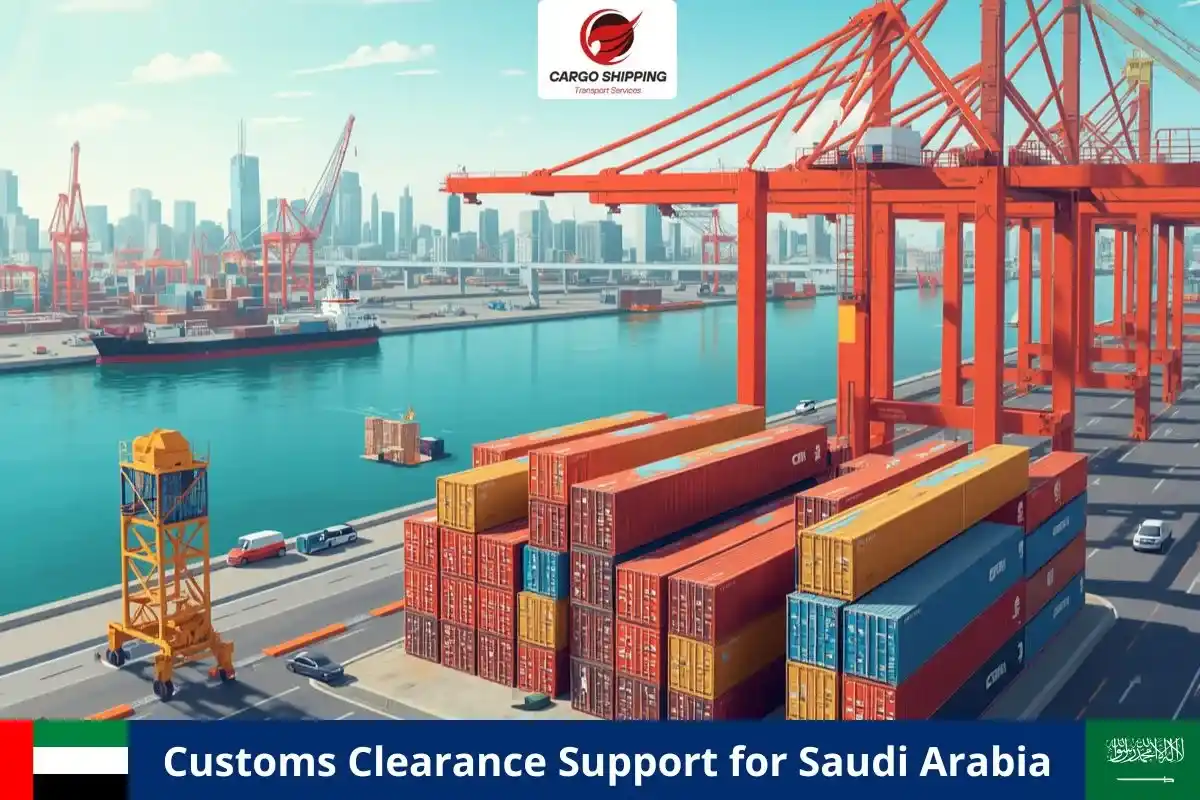
Customs clearance can sound complicated, but it is simply the formal process that lets your goods enter or leave Dubai legally. Every shipment that crosses the border must be declared, checked, and cleared. When your documents are right, the process is quick. When they are wrong, your cargo can sit at the port or airport for days.
This guide explains customs clearance in Dubai for cargo in plain terms. It covers the documents you need, the duty and VAT you may pay, and the step-by-step process, so you can plan your shipment with confidence.
What Is Customs Clearance in Dubai for Cargo?
Customs clearance is the official check of your goods by Dubai Customs. Officers confirm what the goods are, where they came from, what they are worth, and whether any duty or tax is due. They also check that restricted goods have the right permits.
To import or export as a business, you need to register with Dubai Customs through Dubai Trade. You also need a valid trade licence and an importer or exporter code. Without these, your declaration cannot be filed.
Most clearance is handled by a freight forwarder or a licensed customs broker. They file the declaration for you, pay the duty, and deal with any questions from customs. Our international freight forwarding in the UAE includes this service, so you do not have to learn the system yourself.
What Documents Do You Need for Customs Clearance in Dubai?
Good documents are the key to fast clearance. The exact list depends on your goods, but most shipments need the following Dubai customs documents.
First, a commercial invoice that shows the seller, the buyer, a clear description of the goods, the quantity, and the value. Second, a packing list that shows how the goods are packed, with weights and dimensions. Third, the transport document: a bill of lading for sea freight, or an air waybill for air freight.
You will also need a certificate of origin, an import or export declaration, a copy of your trade licence, a delivery order, and proof that any duty has been paid. Some goods need extra permits. Food, medicines, chemicals, and some electronics need approval from the right authority, such as Dubai Municipality or the Ministry of Health. Check this before you ship, because a missing permit is a common cause of delay.
Your HS code matters too. Every product has a code under the 12-digit GCC integrated tariff. The code decides the duty rate and whether a permit is needed. A wrong code can mean the wrong duty, a hold, or a fine, so get it right from the start.
How Much Is Customs Duty in Dubai?
Standard customs duty in the UAE is generally 5% of the CIF value of the goods. CIF means the cost of the goods plus insurance and freight to Dubai. Import VAT is also 5% in the UAE, and it is charged on the CIF value plus duty.
Some goods pay a different rate. Alcohol and tobacco, for example, pay much higher duty. Some goods are exempt, and some pay no duty at all. Goods that qualify under a CEPA trade agreement may get reduced or zero duty, if you have a valid certificate of origin that proves where they were made.
Shipments into a free zone may also qualify for exemptions, as long as the goods stay in the free zone. Duty becomes due if the goods move into the UAE mainland. Ask your forwarder to work out the duty before you ship, so there are no surprises. That figure is part of your total landed cost, just as it is when you compare air freight vs sea freight from Dubai — the freight rate alone never tells the full story.
What Is the Step-by-Step Customs Clearance Process in Dubai?
The cargo clearance process in Dubai follows a clear order. First, your goods arrive at the port or airport, and the carrier issues a delivery order. Second, your forwarder or broker prepares the declaration in Mirsal 2, the Dubai Trade portal where declarations are filed electronically.
Third, the declaration is submitted with the invoice, packing list, bill of lading or air waybill, and certificate of origin. Fourth, Dubai Customs reviews the declaration and works out the duty and VAT. Fifth, you or your broker pays the duty and VAT.
Sixth, customs may inspect the shipment. That can be a document check, an X-ray scan, or a physical inspection. Most shipments pass without a physical check, but customs can inspect any shipment. Finally, once customs releases the goods, they can be collected and delivered. Our door-to-door cargo services cover each of these steps, from collection in Dubai to delivery at the destination.
Whether your goods travel by air freight or by sea freight, the clearance steps are much the same. The documents differ — an air waybill instead of a bill of lading — but the declaration, duty, and inspection stages are the same.
How Long Does Customs Clearance Take in Dubai?
A straightforward shipment with correct documents can clear in 24 to 72 hours. That is the time from filing the declaration to release, not the time your goods spend travelling. Air freight often clears faster than sea freight, because the volumes are smaller and the paperwork is simpler.
Clearance takes longer when documents are missing, values are unclear, or customs decides to inspect the goods. A physical inspection can add a day or more. Plan for this when you promise a delivery date to a customer. For an export example, a shipment such as cargo to the United Kingdom from Dubai still needs Dubai export clearance first, even though the main journey is by air or sea.
What Causes Delays in Customs Clearance?
Most delays come from paperwork. A missing invoice, a vague product description, a wrong HS code, or a value that does not match the goods will all slow things down. Customs may ask for more information, and your shipment will wait until you provide it.
Missing permits are another common cause. If your goods need approval from Dubai Municipality, the Ministry of Health, or another authority, and you do not have it, customs will hold the shipment. Unpaid duty will also hold it. So will a mismatch between the declaration and the goods found on inspection.
You can avoid most delays by preparing early. Send your documents to your forwarder before the goods arrive. Check the HS code. Confirm any permits. Pay the duty as soon as it is assessed. A little preparation at the start saves days at the port.
Which Goods Are Restricted or Prohibited in Dubai?
Not every item can move freely through Dubai Customs. Some goods are restricted, which means they need a permit or approval before they ship. Others are prohibited and cannot be imported or exported at all. Food, medicines, chemicals, cosmetics, electronics with batteries, and telecom equipment often need approval from Dubai Municipality, the Ministry of Health, or another authority.
Prohibited goods include narcotics, counterfeit products, and items that break UAE law or public morals. Weapons, some chemicals, and certain animal products also face bans or strict controls. The list can change, so check the current rules for your exact product before you book.
Ask your supplier for the product’s full specification and safety data sheet if it is a chemical. Send these to your forwarder early, so the permit can be applied for in time. Shipping a restricted item without its permit is one of the fastest ways to have cargo held, fined, or sent back.
What Are the Most Common Mistakes That Delay Clearance?
Most clearance delays are avoidable. The first mistake is a wrong HS code. A code that does not match the goods can mean the wrong duty, a hold, or a fine. Check the code against the 12-digit GCC tariff, and ask your forwarder to confirm it.
The second mistake is a vague or inconsistent description. “Spare parts” or “general goods” tells customs nothing. Give the full product name, model, material, and use, and make sure the invoice, packing list, and declaration all say the same thing.
The third mistake is under-declaring the value or forgetting a document. Customs can revalue goods that look under-priced, and a missing certificate of origin can lose a CEPA duty saving. The fourth mistake is paying duty late or shipping restricted goods without a permit, as covered above.
Use a simple checklist before every shipment: invoice, packing list, transport document, certificate of origin, trade licence copy, permits, and HS codes. Send it all to your forwarder before the goods arrive, and your clearance is far more likely to finish in 24 to 72 hours.
Frequently Asked Questions
Do I need a trade licence for customs clearance in Dubai?
Yes, if you are importing or exporting as a business. You need a valid trade licence and an importer or exporter code, and you need to register with Dubai Customs through Dubai Trade. A licensed forwarder can file the declaration on your behalf.
What is Mirsal 2 in Dubai Trade?
Mirsal 2 is the online system on the Dubai Trade portal where customs declarations are filed. Your forwarder or broker submits the declaration, documents, and duty payment through Mirsal 2, and Dubai Customs reviews it there.
How much is customs duty in Dubai?
Standard duty is generally 5% of the CIF value, which is the cost of the goods plus insurance and freight. Import VAT of 5% also applies. Some goods pay a different rate, and CEPA origin goods may qualify for reduced or zero duty.
How long does customs clearance take in Dubai?
A straightforward shipment with correct documents can clear in 24 to 72 hours. Missing documents, wrong HS codes, missing permits, or a physical inspection can add days, so prepare your paperwork before the goods arrive.
Can a freight forwarder handle customs clearance for me?
Yes. A freight forwarder or licensed customs broker can prepare and file your declaration, arrange duty payment, and deal with inspections on your behalf. That is the simplest option for most importers and exporters.