
Sending cargo to Ghana from Dubai is straightforward when you choose the right route, prepare the paperwork early and work with a forwarder who knows West African shipping. Whether you are moving a few cartons of electronics, a car, household goods or a full container of commercial stock, the two realistic options are air freight to Accra and sea freight to Tema, and each suits a different kind of shipment.
In this guide we explain how shipping to Ghana from Dubai works, what it costs, how long it takes, which documents you need and how Ghana customs clearance works. You will also find practical tips for delivery in Accra and Tema, plus answers to the questions we hear most often from first-time shippers.
What Is Cargo to Ghana from Dubai?
Cargo to Ghana from Dubai means any consignment collected in the UAE, exported from Dubai and delivered to a named address, port or airport in Ghana. Most shipments leave from Jebel Ali Port or Dubai International Airport (DXB) and Dubai World Central (DWC), and arrive at the Port of Tema or Kotoka International Airport in Accra. From there, goods clear Ghanaian customs and are delivered onward by road.
Ghana is one of West Africa’s most stable trading markets, with strong demand for imported electronics, machinery, building materials, vehicles, textiles, food products and household goods. Dubai is a natural supply hub for that trade because it holds stock of so many products, offers frequent sailings and flights, and provides consolidation services that keep small shipments affordable.
A good forwarder handles the whole chain for you: collection in Dubai, export customs, booking with the airline or shipping line, the ocean or air leg, arrival handling in Ghana, customs clearance and final delivery. You should only need to supply accurate cargo details and documents, and agree the service level that fits your deadline and budget.
Air Freight or Sea Freight to Ghana: Which Should You Choose?
The choice comes down to speed, weight and cost. Air freight to Ghana from Dubai is the right option when time matters: samples, urgent spares, high-value electronics and small, light consignments that cannot wait for a ship. Sea freight is the right option for heavy, bulky or lower-value cargo, and for anything that fills a container.
As a rule of thumb, if your shipment is under 100 kg and urgent, air freight usually wins. If it is over 300 kg, or over 2 CBM, sea freight usually works out far cheaper per unit. Between those points, ask for both quotes and compare the total door-to-door cost, not just the freight rate. Our guide to air freight vs sea freight explains the trade-off in more detail.
Many shippers use both: sea freight for the main stock and air freight for the urgent top-up items that must reach Accra first. A forwarder can split a consignment that way and keep both parts moving on the same set of documents.
How Much Does Dubai to Ghana Cargo Cost?
Dubai to Ghana cargo cost depends on the route, the weight or volume, the type of goods and the service level. The figures below are indicative door-to-port and door-to-door ranges for November 2026. They do not include Ghanaian import duty and taxes, which are charged on arrival, and they can move with fuel prices, airline capacity and shipping-line schedules, so always confirm a written quote before you book.
- Air freight, general cargo: around AED 16 to AED 32 per chargeable kilogram, DXB or DWC to Accra, depending on weight, density and the airline used. A 50 kg consignment often costs AED 900 to AED 1,600 door to door.
- LCL sea freight: around AED 400 to AED 700 per CBM from Jebel Ali to Tema, with a one CBM minimum. A 3 CBM shipment therefore often costs AED 1,400 to AED 2,400 port to port, before destination charges.
- 20ft container (FCL): around AED 7,500 to AED 11,500 port to port from Jebel Ali to Tema, for a standard dry container.
- 40ft container (FCL): around AED 10,500 to AED 15,500 port to port from Jebel Ali to Tema.
- Personal effects, small boxes: from around AED 600 to AED 1,200 per box by sea, and AED 25 to AED 45 per kg by air, depending on size and weight.
What changes the price? Heavy, dense cargo costs less per CBM than light, bulky cargo because sea freight is charged on the greater of weight and volume. Dangerous goods, oversized items, refrigerated cargo and goods needing special handling all cost more. Destination charges in Tema, storage if customs clearance is slow, and delivery distance from the port to the final address also add to the total. If you are comparing FCL with LCL, our guide to FCL and LCL shipping explains when a full container becomes cheaper than sharing one.
To keep costs down, pack tightly, measure accurately, avoid shipping air in a sea container, and give your forwarder the correct HS code. Wrong dimensions are the most common reason a quote changes after booking, because the airline or shipping line re-measures the cargo at the terminal.
How Long Does Sea Freight to Ghana Transit Time Take?
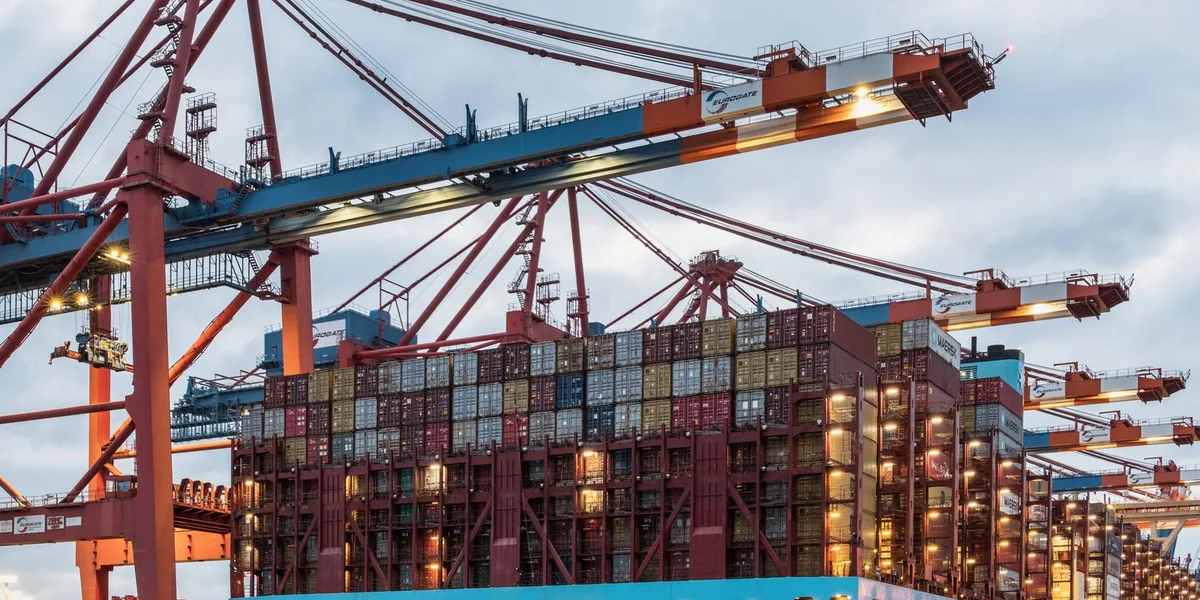
Sea freight to Ghana transit time is longer than most shippers expect, because there is no direct weekly service from Jebel Ali to Tema on most routings. Containers usually tranship at a hub in the Mediterranean or at another West African port, which adds days to the sailing.
- Air freight: 1 to 2 days in the air from Dubai to Accra, and 3 to 6 days door to door including collection, export handling, customs and delivery in Accra.
- Sea freight, port to port: 28 to 38 days from Jebel Ali to Tema, depending on the service and the transhipment port.
- Sea freight, door to door: 35 to 48 days, allowing for collection in Dubai, export clearance, the sailing, arrival handling, Ghana customs clearance and road delivery.
- Express air courier: 2 to 4 days door to door for documents and small parcels under 30 kg.
Build a buffer into your planning. If you need goods in Accra by a fixed date, book sea freight at least six weeks ahead, and air freight at least a week ahead. Peak periods, port congestion in Tema and slow document checks can each add several days, so a forwarder who gives you a realistic schedule is worth more than one who promises the fastest possible date.
How to Ship Cargo to Ghana from Dubai: Step by Step
Shipping to Ghana from Dubai follows the same process for most consignments. Here is how it works, step by step.
- Get a quote. Share the cargo type, weight, dimensions, number of packages, collection address in Dubai and delivery address in Ghana. A forwarder will confirm the route, the price and the transit time in writing.
- Book and prepare documents. Confirm the booking and send the commercial invoice, packing list and any certificates. Your forwarder checks the HS code and tells you whether Ghana needs extra permits for your goods.
- Collection and packing. The cargo is collected from your address, warehouse or supplier in Dubai, checked against the packing list and packed or palletised for export. Export-grade packing matters: cartons should be strong, sealed and clearly marked with the consignee name and address in Ghana.
- Export customs in Dubai. Your forwarder files the UAE export declaration and completes any export permits. Most general cargo clears quickly when the invoice and packing list match the goods.
- Loading and departure. Air cargo is loaded on a flight to Kotoka International Airport. Sea cargo is loaded at Jebel Ali, usually as LCL in a shared container or as a full FCL container, and sails toward Tema.
- Arrival and Ghana customs clearance. On arrival, the cargo is handed to the Ghanaian agent, who files the import declaration with the Ghana Revenue Authority (GRA), pays duty and taxes on your behalf where agreed, and clears the goods through Tema Port or Accra airport.
- Delivery. Cleared cargo is delivered by road to the consignee in Accra, Tema or elsewhere in Ghana. Keep the consignee’s phone number handy: the delivery team will call to confirm the time and to arrange access.
For air freight, the same steps apply in a shorter window, and many of our customers combine it with our air cargo services in Dubai for urgent items. For larger or heavier loads, our sea freight services in Dubai from Jebel Ali are usually the economical choice.
What Documents Are Needed to Ship to Ghana?
Accurate documents are the difference between a smooth clearance and a shipment held at the port. Prepare these before the cargo leaves Dubai.
- Commercial invoice: seller and buyer details, a clear description of each item, quantities, unit values and the total value, plus the currency and Incoterms.
- Packing list: the number of packages, their dimensions and weights, and what is inside each one.
- Bill of lading or air waybill: issued by the shipping line or airline once the cargo is loaded. This is the transport document your consignee uses to claim the goods.
- Certificate of origin: often requested for commercial cargo, and sometimes needed to support a preferential duty rate.
- HS codes: the correct Harmonised System code for each product, which decides the duty rate in Ghana.
- Importer details: the consignee’s full name, address, phone number and Ghana Tax Identification Number (TIN). Companies should also have their Ghana Card and business registration details ready.
- Product certificates where required: for example, Food and Drugs Authority (FDA) Ghana approval for food, medicines and cosmetics, and Ghana Standards Authority conformity for regulated products.
- Personal effects: a detailed inventory with values, a copy of the shipper’s passport and, where applicable, a residence or work permit.
Do not understate values on the invoice. Ghanaian customs officers check declared values against market prices, and an undervalued invoice can lead to a reassessment, a fine and a delay. If you are unsure about a value or a code, ask your forwarder before the cargo sails, when a correction is cheap.
How Does Ghana Customs Clearance Work?
Ghana customs clearance is managed by the Customs Division of the Ghana Revenue Authority, and it applies to every import, whether it arrives by air at Accra or by sea at Tema. The importer, or their licensed clearing agent, files an import declaration, the cargo is assessed, duty and taxes are paid, and the goods are released.
Import duty in Ghana depends on the HS code and ranges from zero for some essential goods to higher rates for finished consumer products. On top of duty, imports are generally charged VAT and statutory levies, including the National Health Insurance Levy and the GETFund levy. The exact amount is calculated on the CIF value, which is the cost of the goods plus insurance and freight, so the freight cost itself affects the tax bill.
Some goods are restricted or need a permit before they can be imported. These include medicines, chemicals, certain food products, used vehicles over a set age, and telecommunications equipment. Check the permit requirement before you ship, because a restricted item arriving without its permit can be held, returned or destroyed at your cost.
Customs clearance in Tema usually takes 2 to 5 working days when the documents are correct and the duty is paid promptly. At the airport in Accra it is often faster, at 1 to 3 working days. Delays usually come from missing documents, a value query, a physical examination or an unpaid charge, which is why most shippers let their forwarder handle customs clearance in Dubai on the export side and a licensed agent on the Ghana side.
What Can You Ship to Ghana from Dubai?
Almost any legal, properly packed cargo can be shipped to Ghana from Dubai. The most common items we move include electronics and home appliances, mobile phones and accessories, textiles and clothing, machinery and spare parts, building materials, furniture, food products such as dates and spices, cosmetics, vehicles and shipping personal effects from Dubai for people relocating to Ghana.
Some goods need special handling. Lithium batteries, perfumes and aerosols are classed as dangerous goods and must be declared and packed to airline or shipping-line rules. Temperature-sensitive cargo needs a reefer container or a cold-chain air service. Vehicles need their registration documents, and the consignee should check Ghana’s rules on vehicle age and condition before buying.
Prohibited and restricted items include narcotics, counterfeit goods, unlicensed medicines, pornographic material and goods that breach Ghanaian import rules. If you are unsure whether your item is allowed, check with your forwarder first. It is far cheaper to ask than to have a shipment stopped in Tema.
Consider cargo insurance in Dubai for any shipment you cannot afford to lose. Sea freight carries real risks, from rough weather to handling damage, and a standard carrier liability limit rarely covers the full value of commercial stock. Insurance is usually a small percentage of the cargo value and is worth it for electronics, machinery and high-value personal effects.
Accra and Tema Cargo Delivery: Where Can Your Goods Reach?
Most cargo to Ghana arrives through Tema or Accra, and delivery from there covers the whole country by road. Accra is the capital and the main commercial centre, so delivery there is fast, usually within a day of clearance. Tema is Ghana’s main seaport and sits about 25 kilometres east of Accra, so containers cleared at Tema can be delivered to Accra the same day.
Beyond the capital, regular road delivery reaches Kumasi, Takoradi, Cape Coast, Tamale, Ho and Sunyani. Takoradi has its own port and is a useful arrival point for cargo bound for western Ghana and the mining and oil regions. Allow an extra 1 to 3 days for delivery outside Greater Accra, and confirm the delivery address and access with the consignee in advance, especially for heavy items that need a tail lift or a forklift at the destination.
If your customer is elsewhere in West Africa, the same Dubai to Ghana route can be a starting point: our guide to cargo to South Africa from Dubai covers a longer African route for comparison, and your forwarder can advise on onward connections from Tema to neighbouring countries.
Frequently Asked Questions About Cargo to Ghana from Dubai
How much does it cost to ship cargo to Ghana from Dubai?
Air freight generally costs AED 16 to AED 32 per kg, LCL sea freight AED 400 to AED 700 per CBM, a 20ft container AED 7,500 to AED 11,500, and a 40ft container AED 10,500 to AED 15,500, port to port from Jebel Ali to Tema. The final price depends on weight, volume, cargo type and delivery address, and Ghanaian duty and taxes are charged separately on arrival.
How long does cargo take from Dubai to Ghana?
Air freight takes 3 to 6 days door to door, and sea freight takes 35 to 48 days door to door, including customs clearance and delivery. Port-to-port sea transit from Jebel Ali to Tema is usually 28 to 38 days, because most services tranship at a hub port on the way.
What documents do I need to ship to Ghana?
You need a commercial invoice, a packing list, a bill of lading or air waybill, the correct HS codes and the consignee’s Ghana TIN. Commercial cargo may also need a certificate of origin and product permits, for example FDA Ghana approval for food or medicines, while personal effects need a detailed inventory and a passport copy.
Is there a direct flight or sailing from Dubai to Ghana?
There are flights from Dubai to Accra, but cargo is often carried on services that stop on the way, and sea freight from Jebel Ali to Tema normally tranships at a hub port. Your forwarder will confirm the exact routing, the departure schedule and the expected arrival date when you book.
Can I ship a car from Dubai to Ghana?
Yes, cars are regularly shipped from Dubai to Ghana, usually in a container or by roll-on roll-off service. You will need the vehicle registration and ownership documents, and you should check Ghana’s rules on vehicle age, condition and import duty before you buy or ship the car, because duty on vehicles is significant.
Do I need cargo insurance for shipments to Ghana?
Insurance is not compulsory, but it is strongly recommended for valuable, fragile or commercial cargo. Carrier liability is limited, so without insurance you may only recover a small part of the value if the cargo is damaged or lost. Ask your forwarder for a quote based on the declared value of your goods.
Cargo to Ghana from Dubai works best when the route, the documents and the delivery plan are agreed before the cargo leaves. Share accurate weights and dimensions, choose air freight for urgent items and sea freight for heavy or bulky loads, and let your forwarder handle the customs paperwork on both sides. With that in place, your goods can move from Dubai to Accra or Tema with no surprises, and on a schedule you can plan around. Contact Cargo Shipping for a written quote for your next shipment to Ghana, and we will confirm the best route, the cost and the transit time for your cargo.


