
Project cargo Dubai businesses move every week does not fit in a standard shipping container. It may be a transformer for a power station, a turbine for a desalination plant, a drilling rig part, or a piece of construction machinery that is too tall, too wide or too heavy for a normal box. Moving it takes planning, the right equipment and permits — and that is what project cargo is all about.
In this guide, we explain what project cargo from Dubai involves, the five main ways to ship oversized and heavy-lift cargo, how the process works step by step, what it costs, which documents and permits you will need, and how long each mode takes. Whether you are moving a single machine or a full plant, this guide gives you a clear, practical starting point.
What Is Project Cargo?
Project cargo is cargo that cannot be shipped as ordinary container freight because of its size, weight or shape. It is usually linked to a specific project — a construction site, an energy plant, an oil and gas installation or a factory — and it often has to arrive by a fixed date, because the rest of the project is waiting for it. That deadline, and the size of the pieces, is what makes project cargo different from general cargo.
Typical project cargo from Dubai includes transformers and generators, turbines and engines, construction equipment such as excavators and cranes, steel structures and pipes, boats and yachts, and industrial machinery. Some pieces weigh more than 50 tonnes, and some are more than 12 metres long. Oversized cargo shipping Dubai services handle pieces that are too long for a standard container, while heavy lift cargo UAE services handle pieces that need a crane, a lowbed trailer or a specialist vessel to move them.
Project cargo is often out of gauge, which means it sticks out beyond the dimensions of a standard container, or it is a breakbulk load, which means it is carried as a single piece rather than in a container. Both terms describe the same problem: the cargo does not fit the standard box, so the transport has to be planned around the cargo, not the other way round.
When Does Cargo Need Special Handling?
Not every large item is project cargo, but a shipment usually needs special handling when any of these apply. The piece is longer, wider or taller than a standard 40-foot container, which is 12.03 metres long, 2.35 metres wide and 2.39 metres high inside. It weighs more than the container’s payload limit, usually around 26 to 28 tonnes for a standard container. It cannot be dismantled into smaller pieces, or dismantling it would damage it or cost more than specialist transport. It needs a crane, a forklift with a high capacity, or a lowbed trailer to load and unload it.
It also needs special handling when the route itself is a problem — for example, a low bridge, a narrow road, a weight limit on a highway, or a port that does not have a heavy-lift crane. In those cases, a route survey is needed before the cargo moves. If you are unsure whether your cargo counts as project cargo, send your forwarder the dimensions, weight and a photo. A quick check at the start is far cheaper than a rejected booking at the port.
5 Ways to Ship Project Cargo from Dubai
There are five main ways to move oversized and heavy-lift cargo from Dubai. The right choice depends on the size, the weight, the destination and the deadline. Most project cargo Dubai shippers use moves by sea, with road transport at one or both ends.
1. Flat Rack Container Shipping
Flat rack container shipping is the most common option for oversized cargo that is too wide or too tall for a standard container but can still travel on a container vessel. A flat rack has no sides or roof, only a floor and end walls, so cargo can be loaded from the top or the side and can overhang the sides. The cargo is lashed and secured to the flat rack, and the rack is then loaded onto the vessel like a normal container. Flat racks are available in 20-foot and 40-foot sizes, and they are a good choice for machinery, vehicles, boats and steel structures.
2. Open Top Containers
Open top containers have a removable roof, so tall cargo can be loaded from above with a crane. They are useful for cargo that is too tall for a standard container but not too wide, such as tall machinery, tanks and large crates. Once the cargo is in, a tarpaulin covers the top. Open top containers travel on normal container vessels, so they are often easier to book than a flat rack, and they protect the cargo better than an open flat rack.
3. Breakbulk Cargo
Breakbulk cargo Dubai services carry cargo as individual pieces on a specialist vessel, rather than in containers. This is the right choice for very large or very heavy pieces, such as transformers, turbines, yachts and large steel structures, that do not fit on a flat rack at all. Breakbulk vessels have their own heavy-lift cranes, and the cargo is stowed on deck or in the hold and lashed down for the voyage. Breakbulk is more expensive per tonne than container shipping, but it is often the only way to move the largest pieces.
4. Roll-On / Roll-Off (RoRo)
RoRo vessels carry wheeled cargo, such as trucks, trailers, construction vehicles and machinery on wheels, which is driven on and off the vessel. RoRo is a good choice for self-propelled machinery and for cargo that is already on a trailer, because loading is fast and there is no crane lift. It is commonly used for project cargo moving from Dubai to ports in the Gulf, Africa and Europe where RoRo services run regularly.
5. Road Transport and Lowbed Trailers
For project cargo moving within the UAE and to neighbouring Gulf countries, road transport on a lowbed trailer is often the best choice. A lowbed trailer sits close to the ground, so tall cargo can pass under bridges, and it can carry very heavy loads. Lowbed trailer heavy equipment transport is used for excavators, generators, transformers and other machinery that needs to reach a construction site or a plant directly. For longer journeys, road transport is combined with sea freight: the cargo travels by lowbed to Jebel Ali, then by flat rack or breakbulk to its destination, then by lowbed again at the other end.
How Project Cargo Shipping from Dubai Works
Project cargo moves in stages, and each stage needs to be planned before the cargo moves. A missed survey or a late permit is the usual cause of a delay, so it helps to know the order.
Step 1 — Survey and measure the cargo
Send your forwarder the exact length, width, height and weight, the centre of gravity, lifting points and photos of the cargo. For heavy pieces, the forwarder will arrange a site survey to check how the cargo will be lifted, what crane capacity is needed and whether the road from the site to the port can take the weight.
Step 2 — Plan the route and choose the mode
With the dimensions in hand, the forwarder plans the route. That means checking bridge heights, road weight limits, port crane capacity and vessel availability, and choosing between flat rack, open top, breakbulk, RoRo or road transport. A route survey is often needed for road legs, especially for cargo over 4.5 metres high or 30 tonnes. Our guide to FCL vs LCL shipping from Dubai explains standard container choices, but project cargo needs this separate route plan.
Step 3 — Arrange permits and approvals
Road permits are needed for oversized and overweight loads in the UAE and in neighbouring countries, and port and vessel approvals are needed for heavy lifts. The forwarder applies for these with the cargo dimensions and the planned route, and they must be in place before the cargo leaves the site. Allow extra time for permits on a first shipment, because the authorities may ask for a route survey or an escort plan.
Step 4 — Pack, lash and secure the cargo
Project cargo is lashed and secured so it cannot move during transport. That means chains, straps and timber blocking on a flat rack or lowbed, and a lashing plan for breakbulk cargo on a vessel. The cargo is usually protected against sea water, dust and vibration with shrink wrap, tarpaulins or a wooden crate. If the cargo is also hazardous — for example, a generator with fuel in its tank — it must also follow dangerous goods rules. Our guide to dangerous goods shipping from Dubai explains how hazmat cargo is classified and declared.
Step 5 — Load, transport and deliver
The cargo is loaded by crane or driven onto the vessel or trailer, then transported by sea or road to its destination. On arrival, it is unloaded by crane, cleared through customs and delivered to the site, often by lowbed trailer for the final leg. The forwarder tracks the shipment throughout and confirms delivery with the site team.
How Much Does Project Cargo from Dubai Cost?
Project cargo costs more than standard container freight, because it needs specialist equipment, surveys and permits. There is no single price, because the cost depends on the size and weight, the mode, the route and the deadline. As a guide, these are the main cost factors:
- Size and weight — larger and heavier pieces need bigger cranes, stronger trailers and, sometimes, a dedicated vessel or sailing.
- Mode of transport — flat rack and open top containers are usually the most economical sea options, breakbulk is more expensive, and road transport is economical within the Gulf but costly over long distances.
- Route and destination — direct routes to major ports cost less than routes that need transhipment, escorts or a route survey.
- Cranes and lifting — heavy-lift cranes at the port, at the site and at the destination are charged separately, and a second crane is sometimes needed for very heavy pieces.
- Permits and escorts — oversized road permits, police escorts and port approvals add to the cost, and they vary by country.
- Lashing, packing and insurance — specialist lashing, protective packing and cargo insurance are essential for high-value project cargo. See our guide to cargo insurance in Dubai for what a policy should cover.
- Deadline — a fixed delivery date may need a dedicated sailing or a direct road movement, which costs more than a flexible schedule.
To keep costs down, give your forwarder accurate dimensions early, avoid last-minute changes to the route or the delivery date, and consider flat rack or open top options before breakbulk. A piece that is measured wrongly can be the most expensive mistake in project cargo, because it may need to be re-lashed, re-booked or sent back to the site.
Documents and Permits for Project Cargo
Project cargo needs more paperwork than standard freight, because the cargo, the route and the lifting all need approval. For most shipments from Dubai, you will need a commercial invoice and packing list with the exact dimensions, weight and value, and a certificate of origin. For road legs, you will need oversized and overweight road permits for the UAE and for each country the cargo passes through, with the route and the vehicle details stated on the permit.
For sea freight, you will need a booking confirmation that states the cargo is out of gauge or breakbulk, a lashing and securing plan, and a stowage plan from the carrier. For heavy lifts, the carrier may ask for a lifting plan and the crane capacity at the load and discharge ports. Customs clearance in Dubai for cargo must also be arranged, with the same dimensions and weight on every document, because a mismatch between the invoice, the permit and the booking is a common reason for a delay at the port. If the cargo is going to a project site, the consignee should also confirm that the site can receive a heavy load, with a crane or a forklift of the right capacity on the delivery date.
Transit Times for Project Cargo from Dubai
Sea freight is the usual choice for project cargo, and transit times depend on the route. From Jebel Ali, a flat rack or breakbulk shipment takes about 12 to 18 days to Europe, 10 to 16 days to East Asia, 18 to 28 days to the east coast of North America and 7 to 12 days to India and the wider Gulf. Road transport within the Gulf takes 1 to 3 days. Air freight is much faster — 1 to 3 days to most destinations — but it is only practical for smaller, high-value pieces that fit in an aircraft. Our comparison of air freight vs sea freight from Dubai explains the cost and speed trade-off in more detail.
Allow extra time for surveys, permits and loading. A heavy lift can take a full day to load, and a route survey can take several days to arrange. For a project with a fixed installation date, book the transport as soon as the cargo dimensions are confirmed, and agree the delivery date with the site team before the cargo leaves Dubai.
Where We Ship Project Cargo from Dubai
From Dubai, project cargo moves by sea from Jebel Ali to ports across Europe, Asia, Africa and the Americas, and by road across the UAE and the wider Gulf to Saudi Arabia, Oman, Qatar and Kuwait. Popular routes include Dubai to the United Kingdom and Europe, Dubai to India and South East Asia, and Dubai to East Africa, where construction and energy projects need regular heavy-lift deliveries. For a full overview of what we offer, see our logistic services in Dubai.
Frequently Asked Questions About Project Cargo from Dubai
What is the largest cargo you can ship from Dubai?
There is no single limit, because it depends on the vessel, the port crane and the road route. Breakbulk vessels can carry pieces of several hundred tonnes, and flat racks can carry up to about 40 tonnes. Send us the dimensions and weight, and we will confirm the best option for your piece.
How much does oversized cargo shipping from Dubai cost?
It depends on the size, weight, mode, route and deadline. Flat rack and open top containers are usually the most economical sea options, breakbulk is more expensive, and road transport is economical within the Gulf. A quote needs the exact dimensions and the destination, because a wrong measurement can change the price.
Do I need a permit to move oversized cargo by road in the UAE?
Yes, for loads that exceed the standard size or weight limits. Your forwarder applies for the permit with the cargo dimensions and the planned route. Allow extra time for a first shipment, because the authorities may ask for a route survey or an escort plan.
Can project cargo be shipped by air from Dubai?
Yes, for smaller, high-value pieces that fit in a cargo aircraft, such as urgent machinery parts. Air freight is much faster than sea freight, but it is more expensive and the piece must fit the aircraft door and hold. Most large project cargo travels by sea.
What is the difference between flat rack and breakbulk cargo?
A flat rack is a container platform that travels on a container vessel, while breakbulk cargo travels as individual pieces on a specialist vessel. Flat racks suit cargo that is oversized but still fits a container vessel, while breakbulk suits the largest and heaviest pieces. Small project parts can also travel as parcels — see our parcel shipping service in Dubai — and event and exhibition equipment is handled by our exhibition logistics UAE team.
Project Cargo Dubai: What to Remember
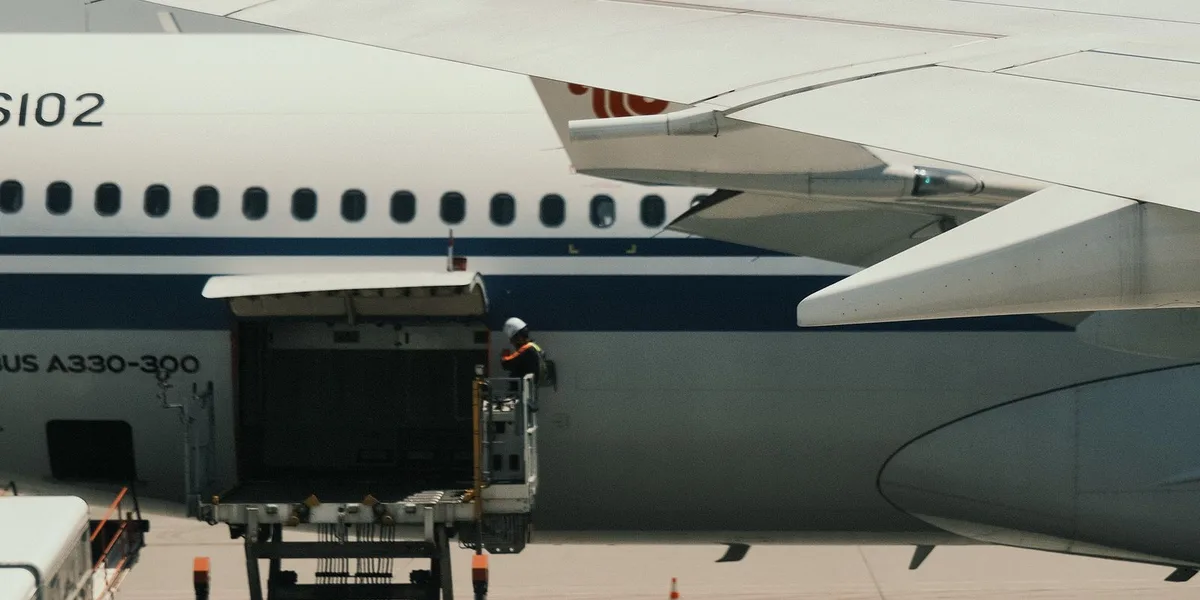
Project cargo Dubai services work best when the cargo is measured accurately, the route is surveyed early and the permits are in place before the cargo moves. Choose the mode that fits the size and the deadline — flat rack or open top for most oversized pieces, breakbulk for the largest, and a lowbed trailer for the road legs — and work with a forwarder who plans the whole journey, from the site to the port and on to the destination.
If you are ready to move a machine, a transformer or a full plant, send us the dimensions, weight, photos and destination, and we will confirm the mode, the permits and a quote. Sources: for the definition of breakbulk cargo, see breakbulk cargo on Wikipedia.
Choosing a Provider for Project Cargo Dubai
If you are comparing providers for project cargo Dubai, ask each one how they handle route surveys, permits and heavy lifting before you compare prices. A good provider for project cargo Dubai will confirm the mode, the crane capacity and the permits before quoting, and will explain the lashing and escort costs in the quote rather than adding them later. That planning is what makes project cargo Dubai reliable, rather than a risk on the day of loading.


